
6 Supplements in the Healthy-Aging Conversation: NMN, Creatine, Pycnogenol, Glutathione, Curcumin and Vitamin C
A pharmacist's short video ranks six supplements people talk about for healthy aging. Here is what each one is, what research suggests, and what to ask a professional first. Information only.
General information only. This article is not medical advice, and it does not diagnose, treat, cure or prevent any condition. It is not a recommendation to take any supplement. Supplements can interact with medicines and may not be suitable for everyone, including people who are pregnant or nursing, have medical conditions, or take prescription drugs. Talk to your doctor or pharmacist before starting, changing or stopping any supplement. The statements here have not been evaluated by any regulator, and the products discussed are not intended to diagnose, treat, cure or prevent any disease.
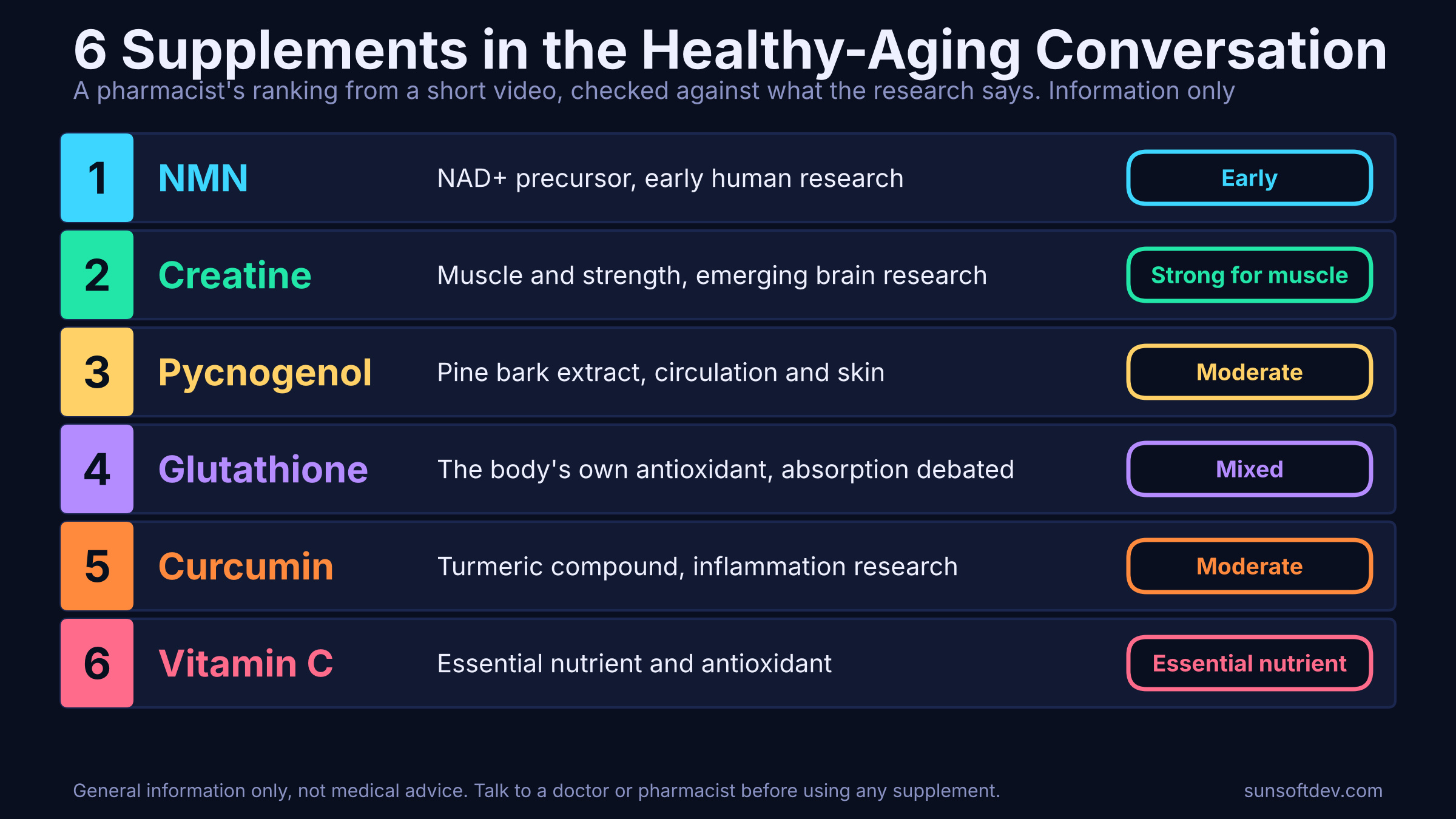
A short video from a pharmacist has been making the rounds. It counts down six ingredients he pays attention to for healthy aging: vitamin C, curcumin, glutathione, pycnogenol, creatine and, at number one, NMN. It ends with a reminder that no single supplement stops aging, and that exercise, sleep and eating habits come first. That last point is the most important thing in the video.
This article takes the same six ingredients and looks at them calmly: what each one is, why people talk about it, how mature the research is, and what to ask a professional before considering it. The order below follows the video's countdown. It is one person's ranking, not ours, and not a recommendation.
First, a word about "anti-aging"
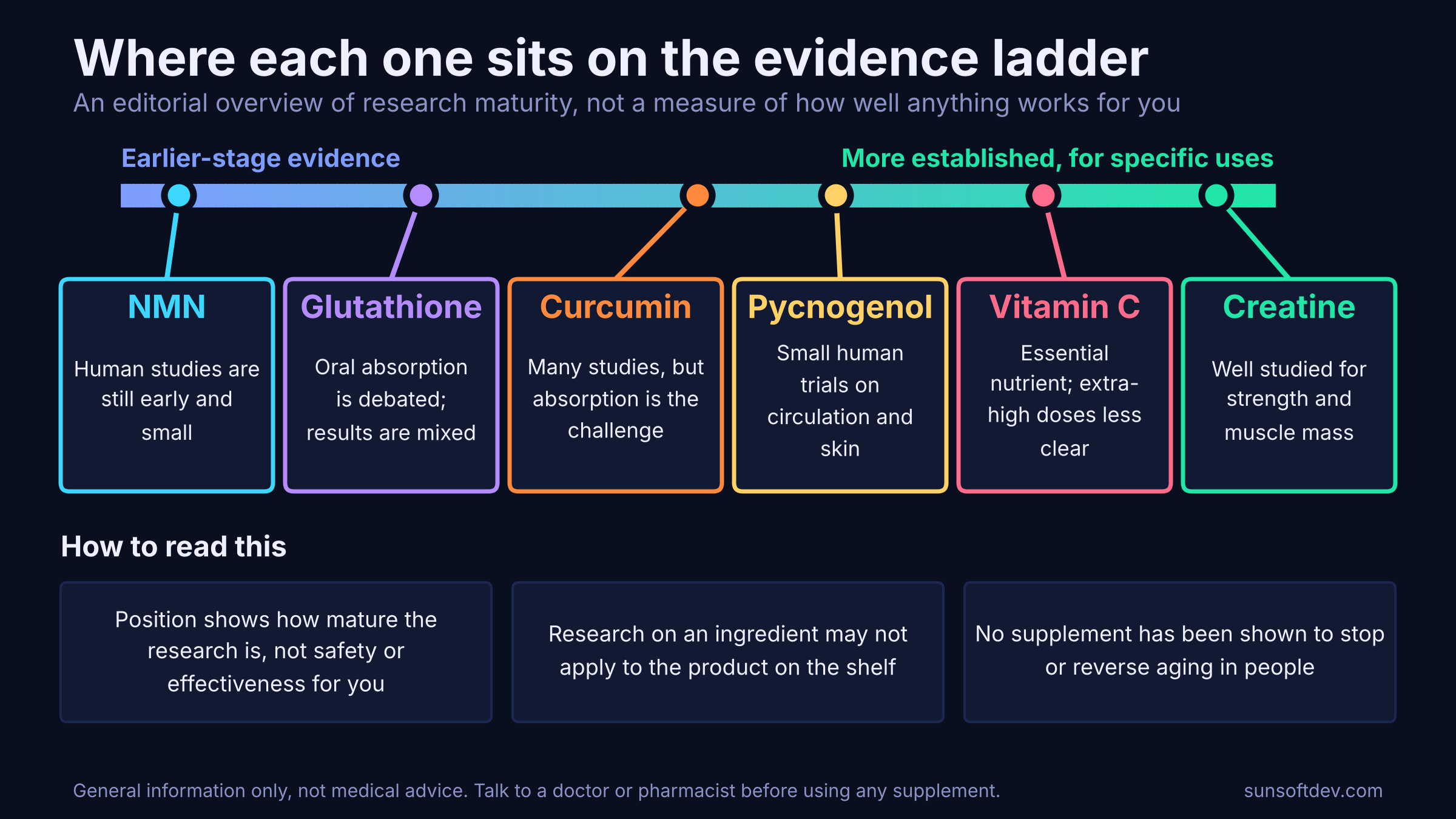
Aging is a normal biological process, and no supplement has been shown to stop or reverse it in people. What researchers study instead are narrower questions: whether an ingredient supports muscle, circulation, skin, inflammation markers or cellular energy, and whether those effects matter for how people feel and function. Many of those studies are small, short, funded by the companies that sell the ingredient, or done in animals or cells. Keep that in mind as you read any ranking, including this one.
The six at a glance
| Rank in the video | Ingredient | Why it is talked about | How mature is the human research? |
|---|---|---|---|
| 6 | Vitamin C | Essential nutrient and antioxidant | Established as a nutrient; extra-high doses less clear |
| 5 | Curcumin | Turmeric compound studied for inflammation | Moderate; absorption is the challenge |
| 4 | Glutathione | The body's own antioxidant | Mixed; oral absorption is debated |
| 3 | Pycnogenol | Pine bark extract studied for circulation and skin | Moderate; mostly small trials |
| 2 | Creatine | Muscle and strength, emerging brain research | Strong for muscle and strength |
| 1 | NMN | Precursor to NAD+, a cellular energy molecule | Early; human data are limited |
The labels in the last column are our editorial summary of how mature the research looks. They describe the research, not how well anything will work for you.
6. Vitamin C: the familiar antioxidant
Vitamin C is an essential nutrient, which means the body needs it and cannot make it. It helps build collagen, supports normal immune function and works as an antioxidant. Fruits and vegetables supply it, and a deficiency causes scurvy. The video calls it the most basic antioxidant supplement, which is fair.
What the research says is less dramatic than the marketing. For people who already get enough, taking more has not been clearly shown to slow aging, and the benefits of very high doses are less clear than many people assume. The video mentions its presenter taking a very large daily amount. That is one person's personal habit, not a guideline. In the United States, the tolerable upper intake level for adults is 2,000 mg a day, and amounts above that can cause stomach upset and diarrhea and may raise the risk of kidney stones in some people.
Things to ask about: your total intake from food and all supplements, any history of kidney stones, and iron-related conditions.
5. Curcumin: promising, but absorption is the catch
Curcumin is the main active compound in turmeric, the yellow spice. It has been studied extensively for its antioxidant and anti-inflammatory properties, which is why people interested in long-term inflammation talk about it.
The catch is that plain curcumin is poorly absorbed. That is why some products add black pepper extract or use specially designed forms, such as phytosome, nano-particle or lipid-based versions. Branded ingredients such as Meriva, Theracurmin and Longvida are examples of enhanced forms. A brand name can indicate that a manufacturer put effort into absorption, but it is not a guarantee of results, and these forms are not interchangeable with each other.
Research is a mix of small trials with encouraging signals and studies with modest or inconsistent results. Rare cases of liver problems have been reported with some turmeric and curcumin products.
Things to ask about: liver or gallbladder conditions, blood-thinning medicines, upcoming surgery, and whether the product uses a studied form.
4. Glutathione: made by the body, debated as a pill
Glutathione is a small molecule made of three amino acids. Your body produces it, and it plays a role in handling oxidative stress and in detoxification pathways. That is why it is often described as the body's master antioxidant, and why it appeals to people who think about oxidative stress.
The debate is about taking it by mouth. As one commenter on the video pointed out, glutathione is a tripeptide, and digestion can break it into its component amino acids. Some studies of oral glutathione have reported changes in blood levels, and others have not, so whether it meaningfully raises levels in the body is still discussed. Some people instead choose products that supply its building blocks, which is a separate question to raise with a professional.
Things to ask about: which form is being sold, the quality and testing of the product, and long-term safety data, which are limited.
3. Pycnogenol: a pine bark extract with a long research history
Pycnogenol is a trademarked extract from the bark of the French maritime pine, rich in plant compounds called procyanidins. It has been studied for a long time, mostly in small human trials, for things like circulation, blood pressure, skin and joint comfort.
The video highlights that it has been studied for many years and could support circulation and antioxidant protection at once. That fits the research picture: there is a body of work, but most studies are small and many have been funded by the manufacturer, so more independent research would help.
Things to ask about: any blood-thinning, diabetes or immune-related medicines, blood pressure, and upcoming surgery.
2. Creatine: the best-studied of the six
Creatine is stored in muscles and helps supply quick energy during short, intense effort. Of the six ingredients here, it has the strongest research base for a specific use: combined with resistance training, it has been shown in many trials to support muscle mass and strength, including in older adults. More recent work is looking at brain-related effects such as memory and cognition, but that research is earlier and less consistent.
Two points matter. First, studies in healthy people have generally not reported kidney harm, but creatine does raise creatinine, a waste product that doctors measure on blood tests to check kidney function. That can make a kidney test look worse even when the kidneys are fine, so tell your doctor if you take it, and ask first if you have any kidney concerns. Second, quality varies. Some products advertise a manufacturer-branded, quality-tested raw material such as Creapure. As with curcumin, a brand signals manufacturing standards, not extra benefit.
Things to ask about: kidney health, blood test interpretation, and the product's third-party testing.
1. NMN: famous, but the research is young
NMN (nicotinamide mononucleotide) is a building block the body uses to make NAD+, a molecule involved in cellular energy and repair. NAD+ levels tend to fall with age, which led to the idea of topping them up. The idea became widely known after a best-selling longevity book brought it to a general audience, which the video alludes to.
Here is where the evidence stands. In human studies, NMN supplements can raise blood NAD+ levels. What is much less clear is whether that translates into meaningful health benefits, how it compares with other approaches, and what long-term use does. The human research is early, mostly small and short. Regulatory treatment of NMN has also changed over time in several countries, so check what applies where you live.
NMN is number one on the video's list, but that is a statement about the presenter's interest, not about the strength of the evidence. In our editorial summary, it sits at the early-stage end of the ladder.
Things to ask about: limited long-term safety data, pregnancy and nursing, other medicines, and current regulatory status where you live.
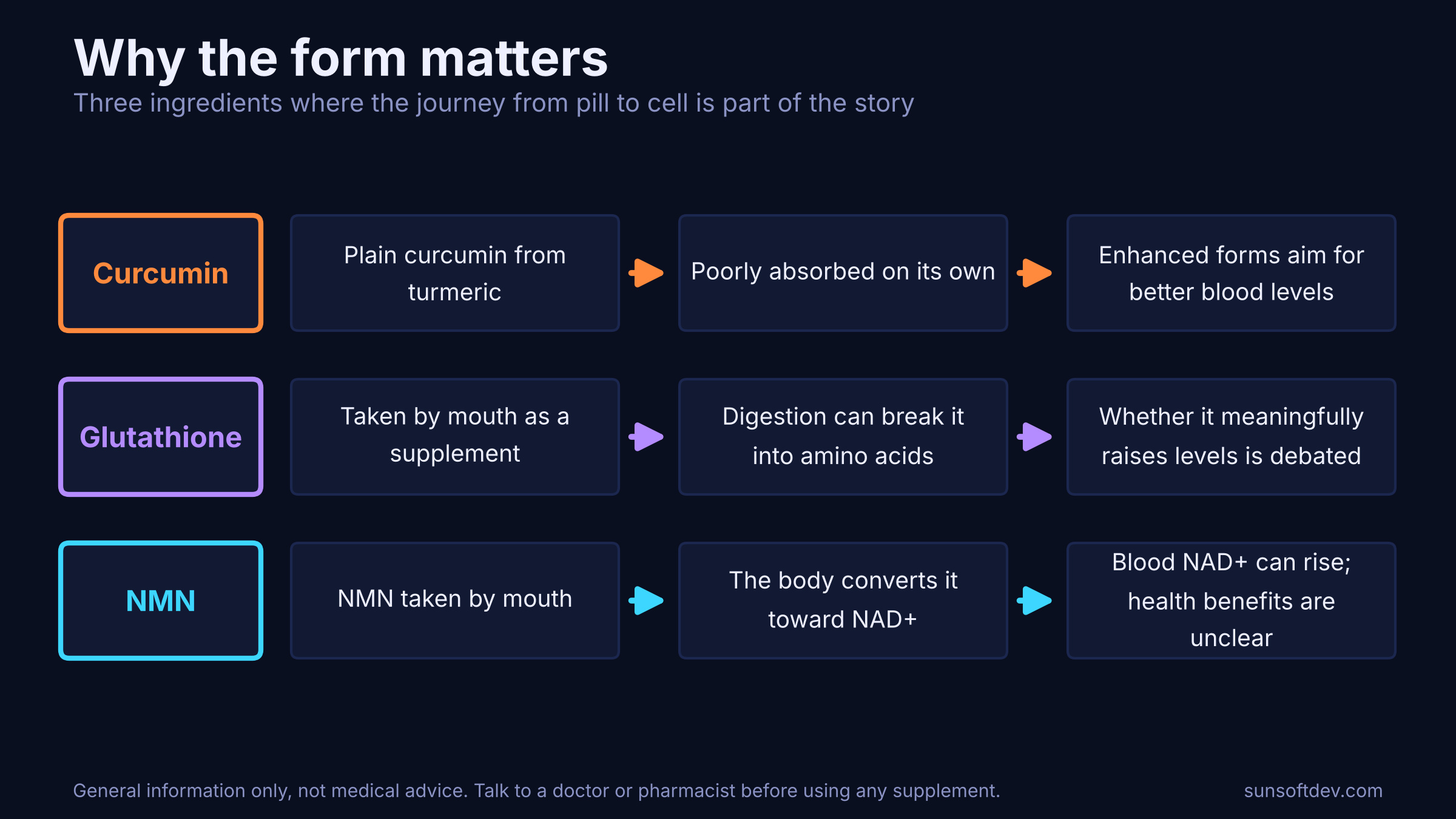
Why the form of a supplement matters
Three of these ingredients show why "contains X" on a label can be less informative than it sounds. Curcumin is poorly absorbed on its own, glutathione may be broken down in digestion, and NMN has to be converted by the body before it does anything. Studies of one form do not automatically apply to another, and product quality, dose and testing vary a lot between sellers.
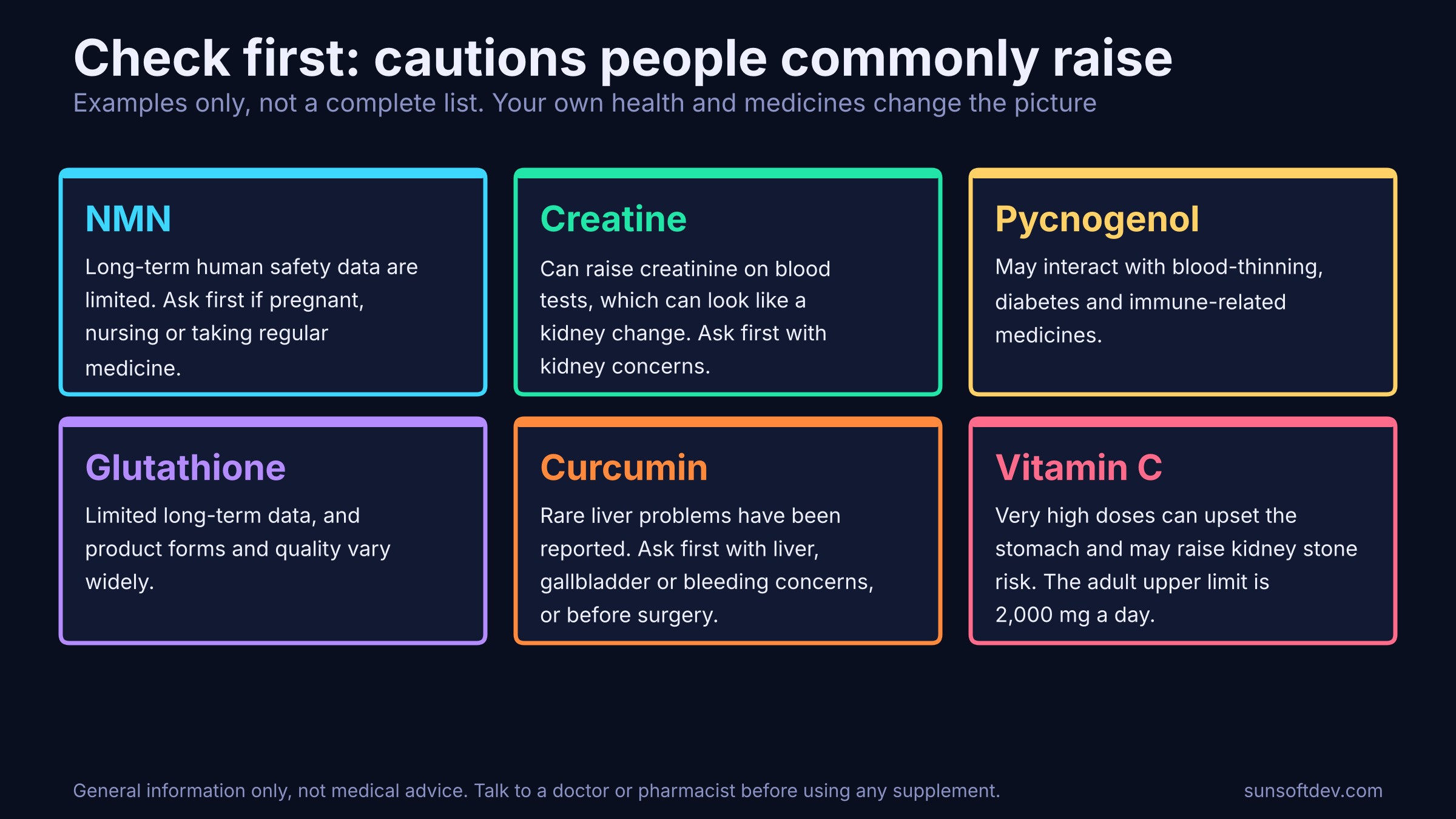
Cautions people commonly raise
Supplements are not risk-free just because they are sold without a prescription. Here are examples of cautions that are commonly raised. This is not a complete list, and your own health and medicines change the picture, which is why a doctor or pharmacist should be part of the conversation.
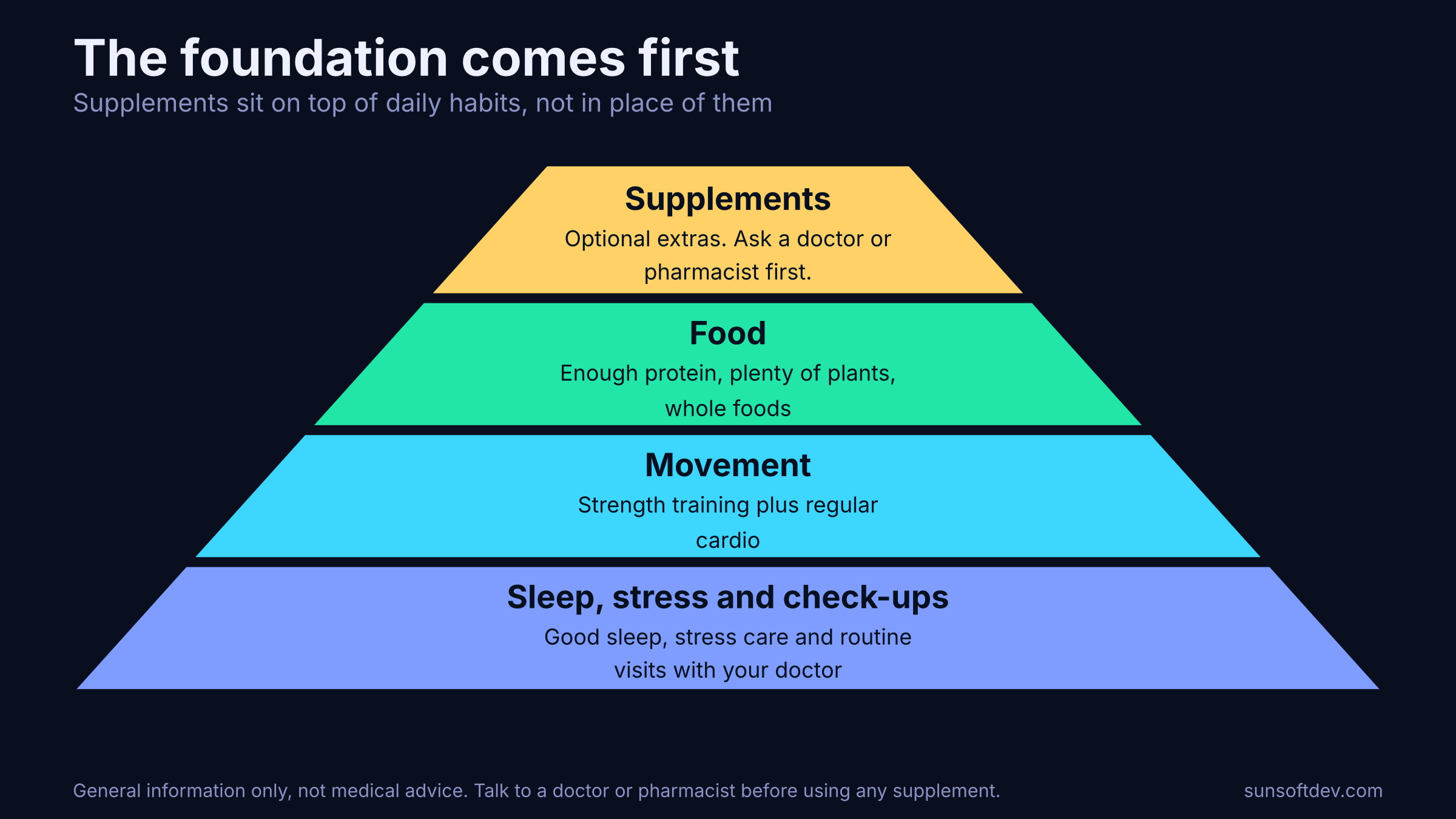
The foundation comes first
The video's closing message is also the most reliable one: no single supplement prevents aging, and exercise, sleep and eating habits are the base. Strength training and regular activity, enough protein and plenty of plants, good sleep, stress care and routine check-ups carry far more weight in the research than any capsule. Supplements, if you use them at all, are an optional layer on top.
How to evaluate any supplement claim
Whatever the ingredient, these questions help:
- What exactly is claimed? Be wary of words like "reverses aging," "cures" or "detox." Honest labels describe narrow, modest effects.
- Who did the research, and in whom? Human studies beat cell or animal studies. Independent studies beat ones funded only by the seller.
- Is it the same form that was studied? Dose, extract and formulation all matter.
- Is the product tested by a third party? Independent testing seals can reduce, though not remove, the risk of wrong doses or contamination.
- What else am I taking? Tell your doctor or pharmacist about every supplement and medicine.
- Change one thing at a time. It makes side effects easier to notice and discuss.
Bottom line
The six ingredients in this ranking sit at very different points on the evidence ladder. Creatine has strong support for muscle and strength. Vitamin C is an essential nutrient whose extra-high-dose benefits are less clear. Curcumin and pycnogenol have moderate but uneven research. Glutathione has a good story and a debated delivery problem. NMN is the best known and the youngest in terms of human data. None of them replaces sleep, movement and food, and none is right for everyone. Use a video like this as a starting point for questions, then take those questions to a doctor or pharmacist who knows your situation.
Disclaimer: This article is general information only. It is not medical advice, a recommendation or an endorsement of any product or brand, and it does not diagnose, treat, cure or prevent any condition. Individual responses differ, and supplements can cause side effects and interact with medicines. Product names mentioned are examples only, and we have no commercial relationship with any of them. Always consult a qualified healthcare professional before starting, changing or stopping a supplement.