
Garcinia, Niacin and Vitamin B6: Why Pharmacists Warn About Long-Term Use
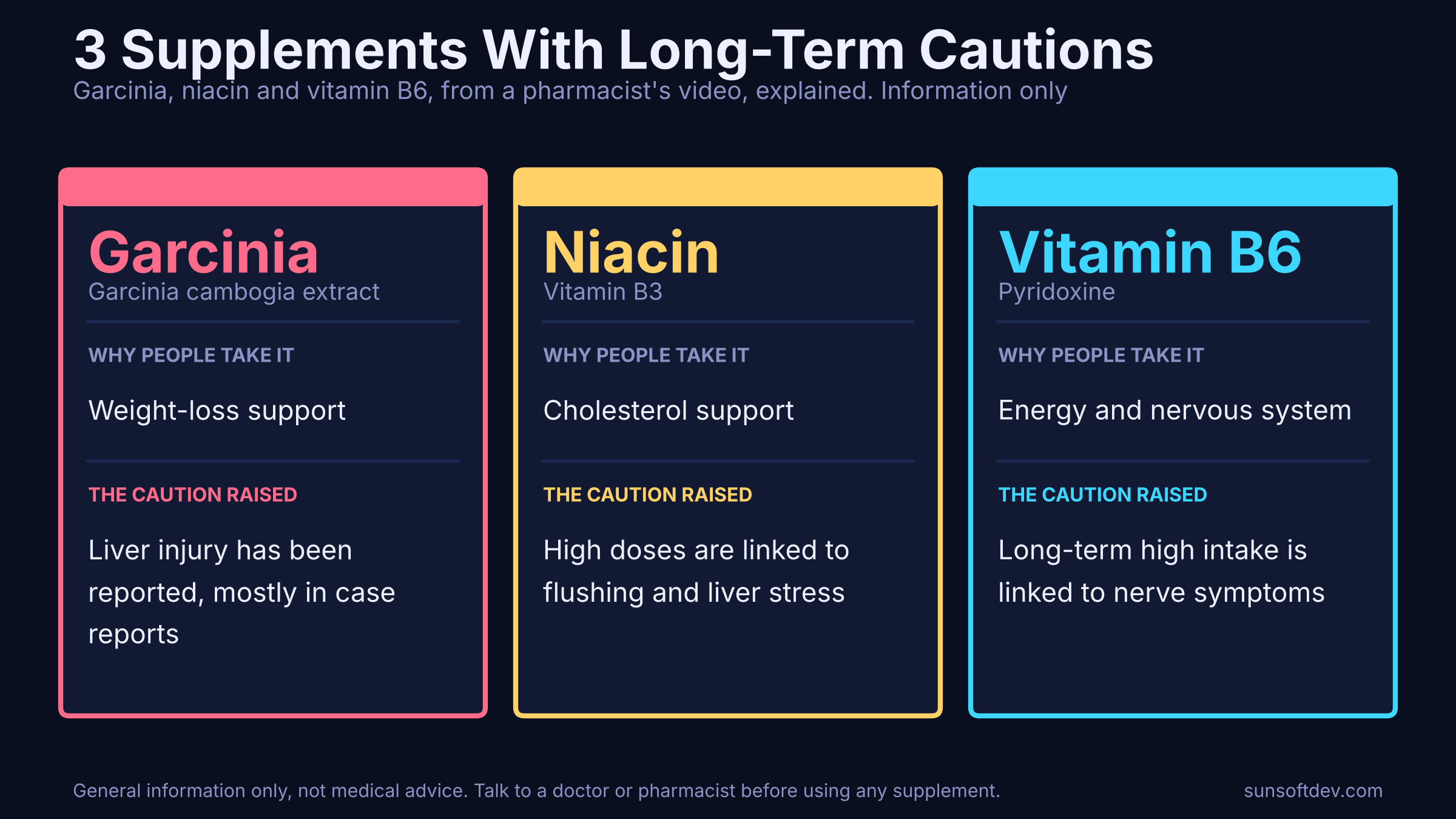
A pharmacist's short video says three popular supplements should not be taken for months on end: garcinia, niacin (vitamin B3) and vitamin B6. Here is what is known about each, why dose and overlap matter, and what to ask a professional. General information only, not medical advice.
General information only. This article is not medical advice, a diagnosis, or a recommendation to start, stop or change any supplement or medicine. Supplements affect people differently depending on age, health conditions, pregnancy, and the medicines they take. Always talk to a doctor or pharmacist before using a supplement, and seek medical care promptly if you feel unwell. Amounts mentioned here are published reference figures for general understanding, not personal dosing guidance.
A short video from a pharmacist has been shared widely. Its message is simple: some supplements that feel harmless should not be taken for months on end. It names three, garcinia, niacin (vitamin B3) and vitamin B6. This article explains what is generally known about each one, in plain language, without telling you what to do. For that, a doctor or pharmacist who knows your situation is the right person.
Why "natural" or "just a vitamin" is not the same as "risk-free"
Supplements are easy to buy, and many are sold in strengths far above what a person needs from food. Three things come up again and again when health professionals talk about problems:
- Time. Something tolerated for a few days may behave differently after months of daily use.
- Amount. A vitamin at the daily need is a different thing from the same vitamin at 10 or 50 times that amount.
- Overlap. The same ingredient can appear in a multivitamin, a B-complex, an energy drink and a "stress" formula, and the totals add up without anyone noticing.
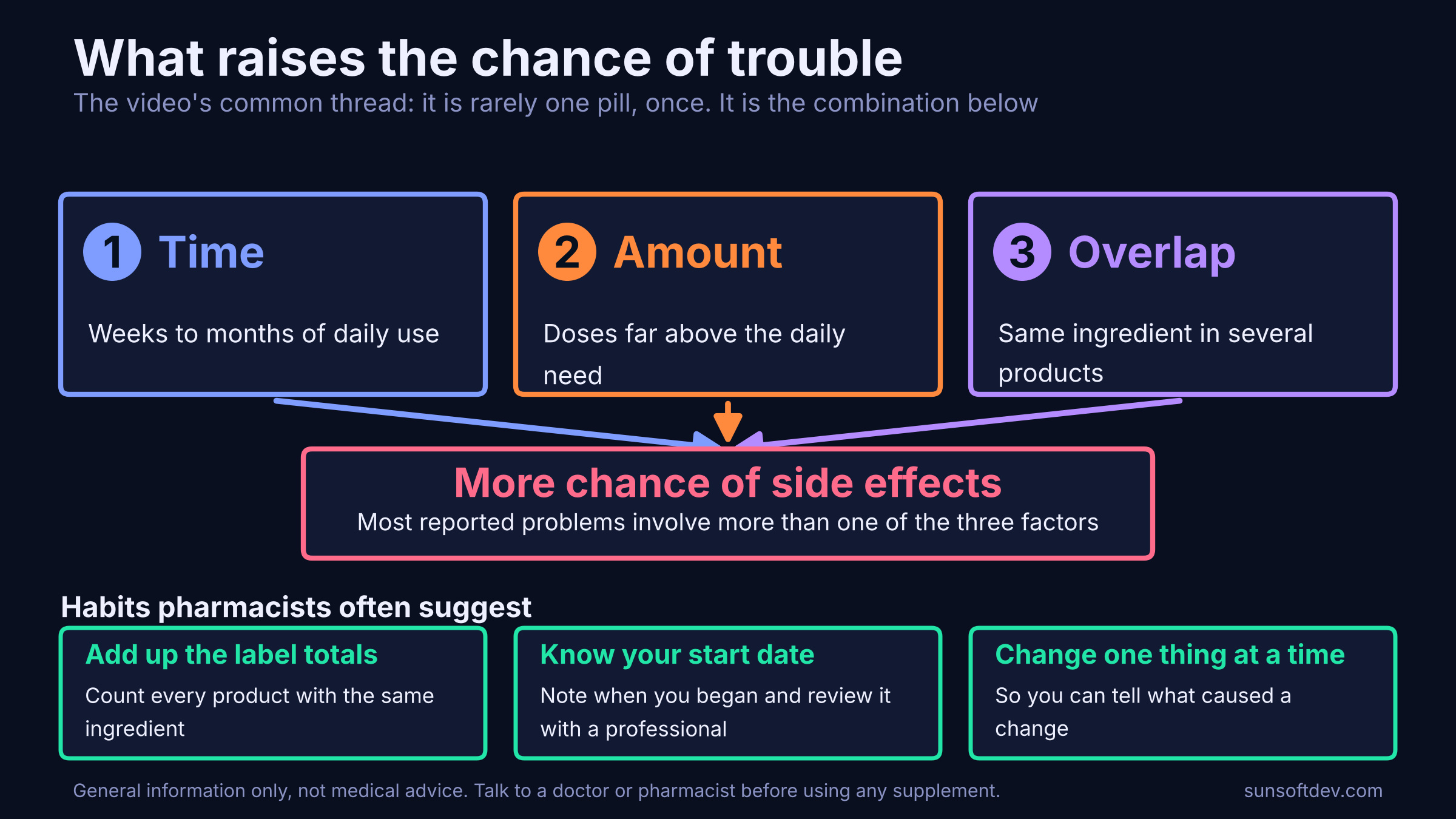
None of this means supplements are dangerous. It means the label total, the start date and the combination are worth knowing. Three habits that pharmacists commonly mention: add up the label totals across everything you take, keep track of when you began, and change one thing at a time so you can tell what caused a change.
Garcinia: modest evidence, notable safety reports
What it is. Garcinia cambogia is a tropical fruit whose rind is made into an extract, usually sold for weight loss.
What studies suggest. Trials have generally found, at most, a small average difference in weight over short periods, and results vary a lot from study to study. Long-term effects on health are not well established.
What has been reported. Doctors and health agencies have described case reports of serious liver injury in people who took garcinia products. Many of these involved multi-ingredient weight-loss products, which makes it hard to say which ingredient was responsible. Some references also mention possible interactions with certain medicines, and product strength and quality can vary widely between brands.
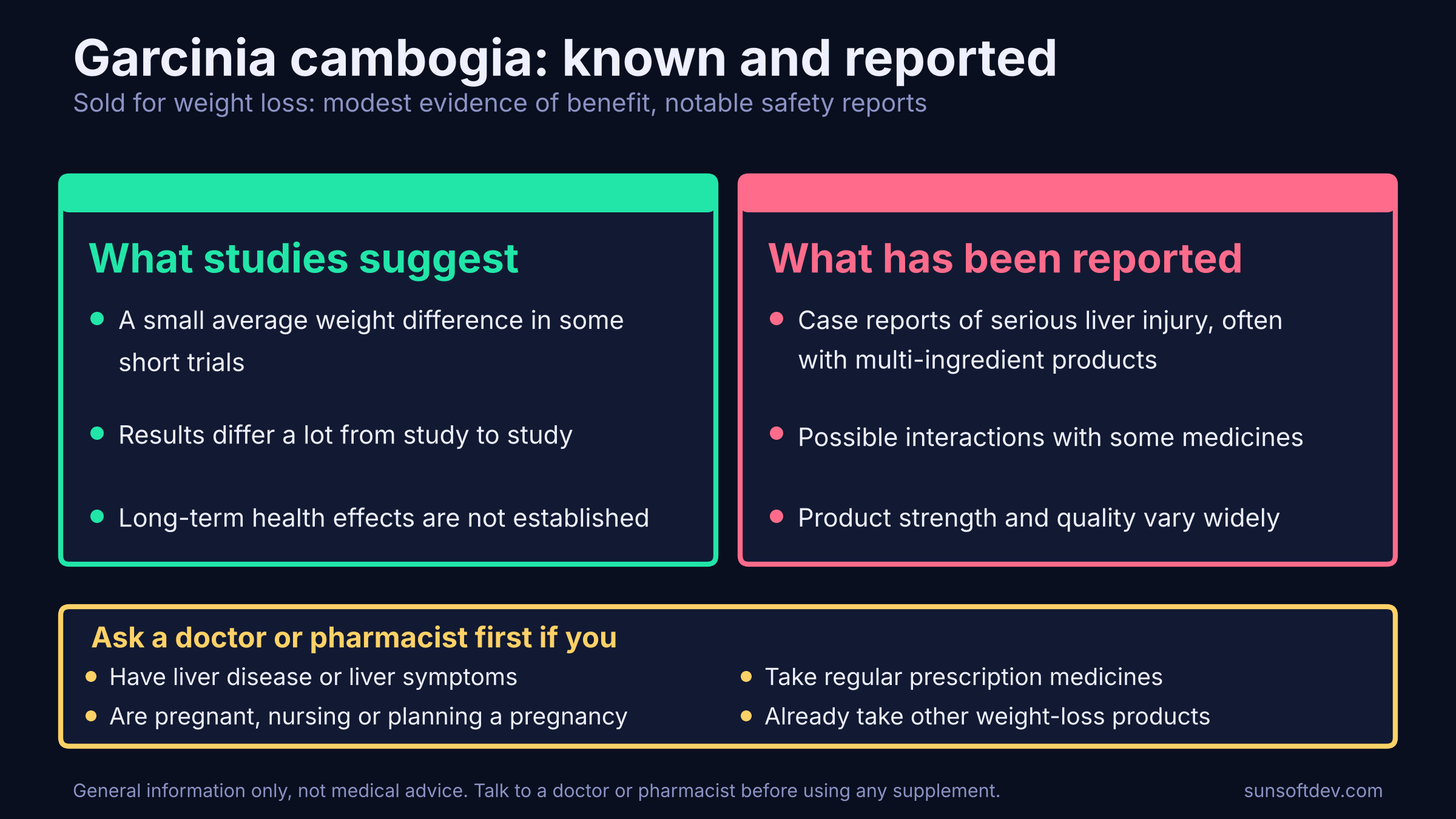
Questions worth bringing to a professional. People often ask a doctor or pharmacist before using garcinia if they have liver disease or liver symptoms, take regular prescription medicines, are pregnant, nursing or planning a pregnancy, or already use other weight-loss products.
Niacin (vitamin B3): small amounts versus big amounts
What it is. Niacin is a B vitamin your body needs in small amounts. It is found in meat, fish, grains and many fortified foods. Higher-strength niacin products are also sold, and doctors sometimes use much larger amounts under supervision for specific medical reasons.
Why the range matters. The commonly cited daily need for adults is roughly 14 to 16 mg. The US upper limit for niacin from supplements is 35 mg a day for adults. Some products contain 500 mg or more per serving, and medical use can go higher still. That is a very wide spread under one name, which is why the chart below uses a log scale.
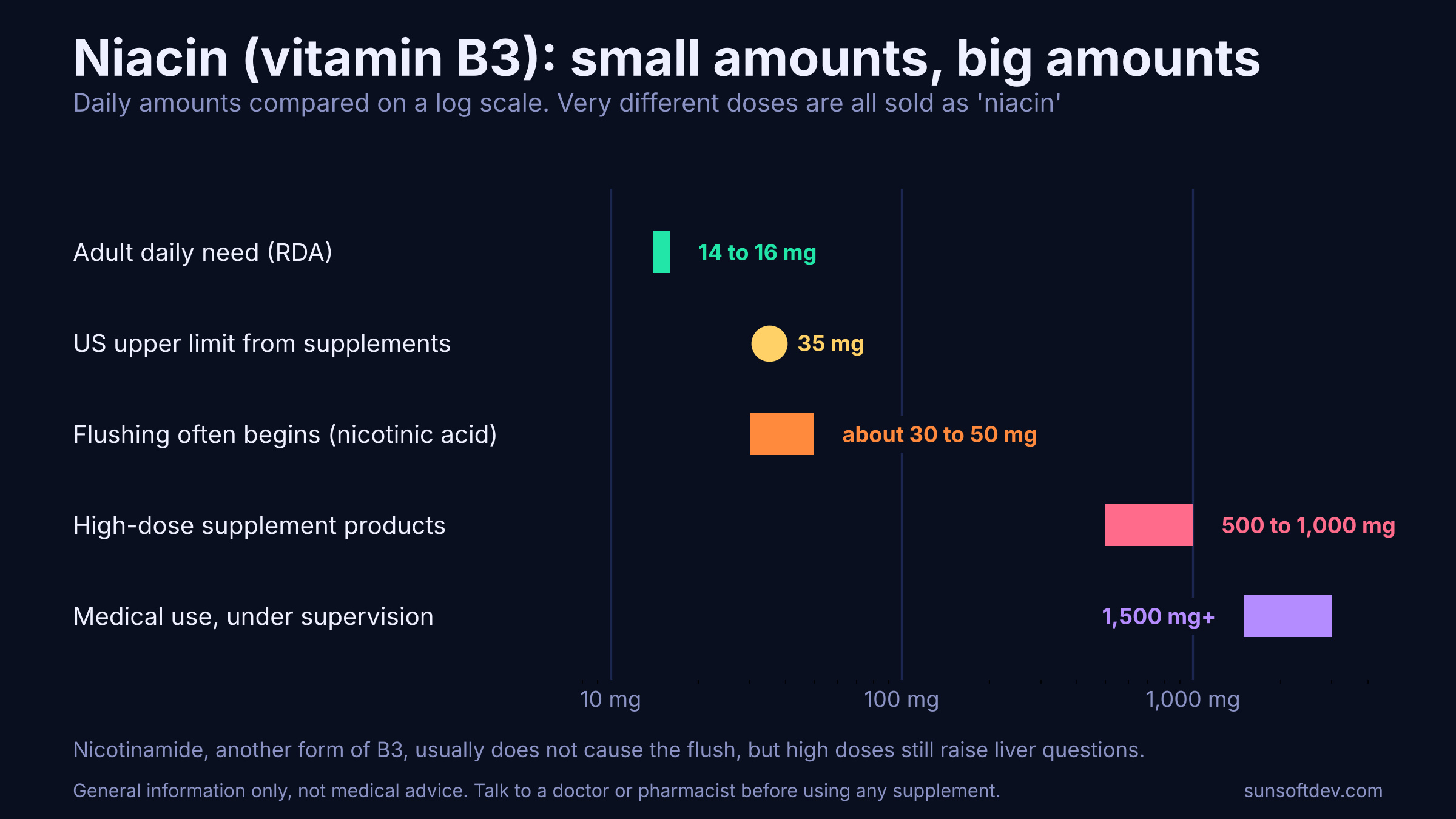
What has been reported. The best known effect of nicotinic acid, one form of niacin, is flushing: warm, red, itchy skin that can start at fairly low supplement amounts. At high doses, liver stress has also been reported. Nicotinamide, another form of B3, usually does not cause the flush, but very high doses still raise questions about the liver.
Questions worth bringing to a professional. If a product is taken for cholesterol, that is a medical goal, and it is worth having a doctor involved rather than managing it with an over-the-counter bottle. Anyone with liver disease, gout, diabetes or stomach ulcers, or anyone taking cholesterol or blood pressure medicines, is commonly told to check first.
Vitamin B6: "the safe number depends on who you ask"
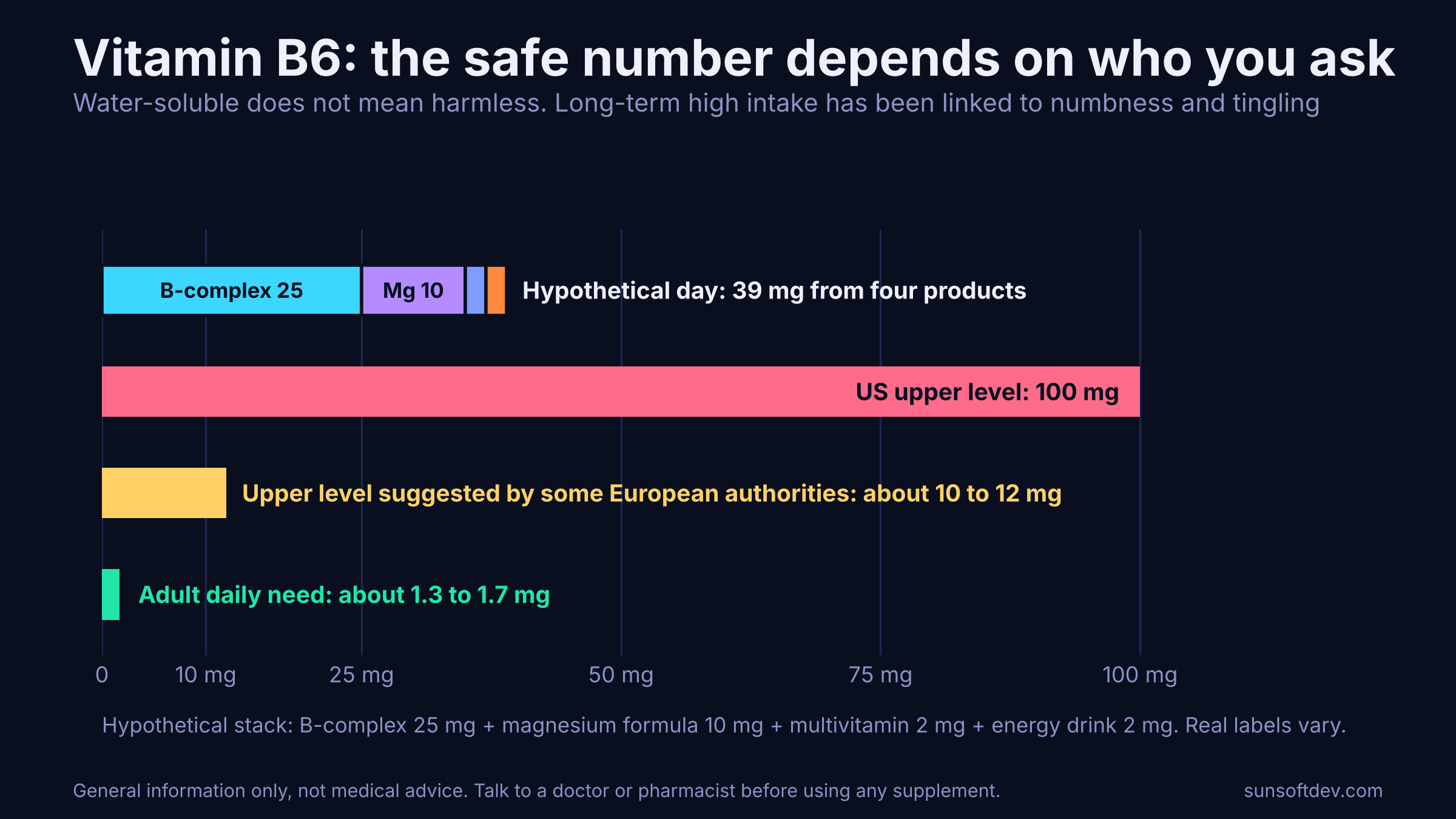
What it is. Vitamin B6 (pyridoxine and related forms) helps the body use protein and supports the nervous system. Most adults need only about 1.3 to 1.7 mg a day, and food usually covers that: fish, poultry, potatoes, bananas and fortified cereals.
Why people overshoot. B6 is "water-soluble," and that leads many people to assume extra is simply flushed away. In reality, long-term high intake has been linked to numbness, tingling and nerve problems in the hands and feet. Symptoms generally improve after stopping, but not always completely, which is why this one gets so much attention.
Different authorities, different limits. The US upper level for adults is 100 mg a day. Some European authorities have suggested a much lower level, around 10 to 12 mg a day from supplements. The gap shows that experts do not fully agree on where the line sits, which is itself a reason to check your total.
Overlap is the common trap. B6 appears in B-complex pills, magnesium formulas, multivitamins, energy drinks and "stress" or "sleep" products. The chart below shows a hypothetical day, not a real person: four ordinary products adding up to 39 mg, well over the lower European figure even though no single product looks extreme.
What to do with this information
This article does not tell you to stop or start anything. If you take any of these, these are reasonable things to bring up with a doctor or pharmacist:
- Which products and strengths am I taking, and what do they add up to?
- How long have I been taking them, and is it still serving a purpose?
- Could any of them interact with my medicines or health conditions?
- Are there symptoms I should watch for, such as yellowing skin or eyes, dark urine, persistent nausea, or tingling and numbness?
- Do I need this supplement at all, or can food cover it?
If you notice unusual symptoms, contact a healthcare professional rather than waiting.
The bottom line
Garcinia, niacin and vitamin B6 are not villains, and the video that circulated is best read as a reminder rather than a verdict. What they share is that duration, dose and overlap change the picture. A vitamin at the amount your body needs is one thing, and a long daily habit of high-strength products stacked on one another is another. A quick conversation with a pharmacist, with the actual bottles in hand, is usually the most useful next step.
Resources
- NIH Office of Dietary Supplements: Niacin fact sheet
- NIH Office of Dietary Supplements: Vitamin B6 fact sheet
- MedlinePlus: Garcinia cambogia
General information only. This article is not medical advice and does not diagnose, treat or recommend any product. Reference amounts are published figures for general understanding and may differ by country, age and health status. Consult a qualified healthcare professional before using any supplement.